
Tornado Preparedness In the Workplace

Original Publish Date: March 2018 by Chris Salmasi | Updated by Mary Bartlett: August 28, 2026
Preparedness is a continuous process of planning, equipping, training, and exercising — and severe weather should be part of that process year-round, not something you think about once a year. Making sure severe weather planning is actually built into your workplace's Emergency Action Plan, rather than handled informally, is one of the simplest ways to close a real gap before it matters. For more general resources on building your business's preparedness program, FEMA's Ready Business initiative is a good starting point.
Planning for tornadoes and other severe weather requires identifying a place to take shelter, being familiar with and monitoring your community's warning system, and establishing procedures to account for individuals in the building. Employers may need additional equipment or resources depending on the severe weather hazards that exist in their area. Workers also need to be trained, and plans need to be practiced, so personnel are familiar with what to do when severe weather hits. Tornadoes are a common severe weather occurrence throughout most of the country, especially during the spring and summer months. Let's review the actions employers can take for tornado preparedness in the workplace to keep employees safe.
Planning
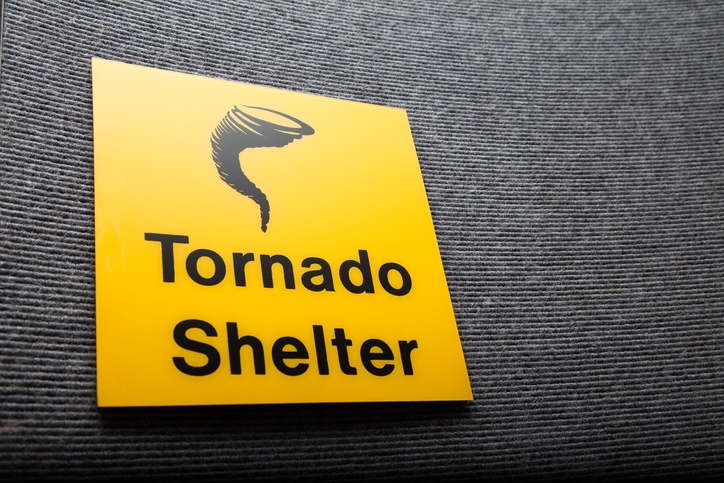
Identifying Tornado Shelter Locations
An underground area, such as a basement or storm cellar, provides the best protection from a tornado. If an underground shelter is unavailable, consider the following:
- Seek a small interior room or hallway on the lowest floor possible.
- Stay away from doors, windows, and outside walls.
- Stay in the center of the room, and avoid corners, since they attract debris.
- Look for rooms constructed with reinforced concrete, brick, or block, with no windows and a heavy concrete floor or roof system overhead.
- Avoid auditoriums, cafeterias, and gymnasiums that have flat, wide-span roofs.
Personnel should also know what to do if caught outdoors when a tornado is threatening. Seek shelter in a basement or a sturdy building. If one isn't within walking distance, try to drive using a seat belt to the nearest shelter. If flying debris is encountered while in a vehicle, there are two options as a last resort: stay in the vehicle with the seat belt on, keeping your head below the windows and covered with your hands or a blanket; or, if there is an area noticeably lower than the roadway, lie in that area and cover your head with your hands.
Accountability Procedures
The following steps are recommended to help ensure the safety of employees if a tornado occurs:
- Develop a system for knowing who is in the building in the event of an emergency.
- Establish an alarm system to warn workers, test it frequently, and develop plans to communicate warnings to personnel with disabilities or who do not speak English.
- Account for employees, visitors, and customers as they arrive in the shelter, using a prepared roster or checklist and taking a head count.
- Assign specific duties to workers in advance, and create checklists for each responsibility.
- Designate and train alternates for each assigned role, in case the primary person isn't there or is injured.
Warning Systems
Tornado Watch: Tornadoes are likely to occur in the watch area. Be ready to act quickly, take shelter, and check supply kits. Monitor radio and television stations for more information.
Tornado Warning: Imminent threat - a tornado has been sighted in the area or indicated by radar. Take shelter immediately.
Your local emergency management office can provide information about your community's tornado warning system.
Does My Business Need an Emergency Action Plan?
Some businesses are required to have a written Emergency Action Plan meeting OSHA's requirements under 29 CFR 1910.38. Emergency Action Plans primarily address evacuation procedures, but severe weather and tornado planning work a little differently. Instead of an exit route, you need a designated shelter-in-place location and a way to account for everyone once they're there. Both belong in the same overall plan.
If you need help determining your compliance requirements, training your team, or preparing your Emergency Action Plan, contact SafeLink Consulting. Learn more in our complete guide to building an Emergency Action Plan for your business.
Get a free Emergency Action Plan Checklist to see where your current plan has gaps, or let our team prepare a custom emergency evacuation map for your facility — including your designated tornado shelter locations and assembly points.
Is your Emergency Action Plan ready?
Get a free Emergency Action Plan Checklist to see where your plan has gaps, or let our team build a compliant EAP for your facility — including a custom emergency evacuation map.
Get the free EAP Checklist ↗ Mary A. Bartlett, Senior Vice President & Founder of SafeLink Consulting, has spent more than three decades at the forefront of dental industry compliance and safety. Since 1991, she has been a trusted presenter and on-site instructor for dental and general industry professionals across the United States, Canada, and Asia — delivering expertise on employee health and safety, patient safety, privacy, and quality assurance. She has authored content for numerous national publications, and her clients consistently benefit from her hands-on experience navigating OSHA, FDA, and State Board inspections.