Respiratory Illness in the Workplace: Compliance Risks

Every fall and winter, influenza (flu), COVID-19, and respiratory syncytial virus (RSV) circulate in the United States. Their timing and severity vary from year to year, but overlapping activity can increase demands on healthcare facilities, affect staffing, and raise concerns about workplace transmission.
According to the CDC's 2026–2027 Respiratory Disease Season Outlook, the combined peak hospitalization rate for these three illnesses is expected to be similar to that of the 2025–2026 season, although the outlook carries uncertainty. CDC expects influenza severity to be moderate across age groups, while COVID-19 activity and the timing of RSV activity remain important factors to monitor.
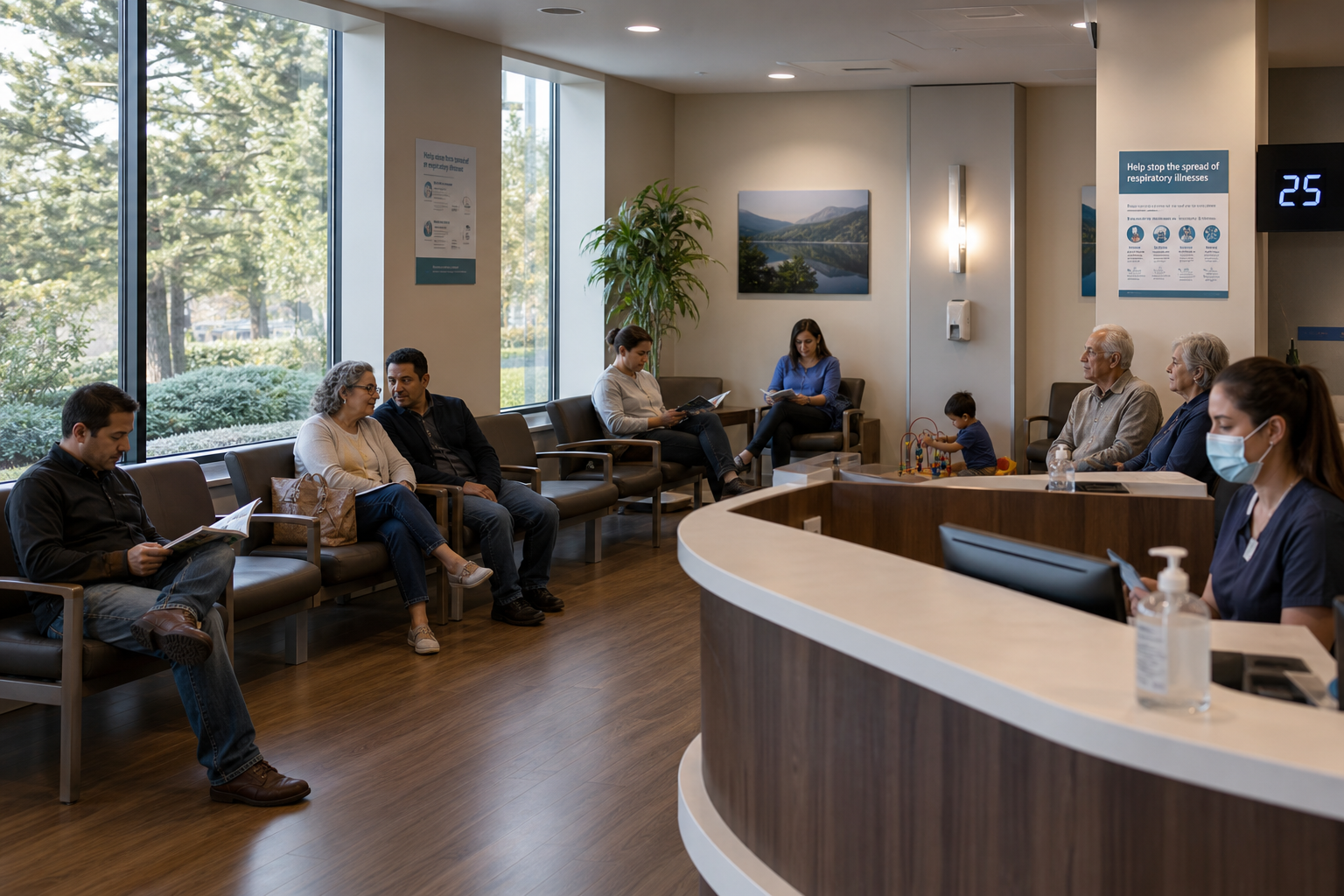
Other infectious diseases also require attention. CDC reported over 4,300 confirmed measles cases in the United States as of October 15, 2026. Unlike typical seasonal respiratory viruses, measles is highly contagious and spreads through the air. Exposure in a healthcare waiting room or other shared indoor space can have serious consequences.
For employers, seasonal preparedness is about more than reminding employees to stay home when sick. It means evaluating workplace hazards, applying appropriate infection-prevention measures, understanding applicable OSHA requirements, and making sure written procedures reflect actual workplace practices.
Dental practices, dental laboratories, medical and wellness practices, and other workplaces where employees interact with patients, handle potentially contaminated materials, or share indoor spaces should review their procedures before seasonal illness activity increases.
Which illnesses to watch this season
Three viruses drive the season, but they aren't the only respiratory threats employers should plan for. The illnesses below matter most for workplace exposure planning in 2026–2027.
|
Illness |
How it spreads |
Why it matters to employers |
|
Influenza (flu) |
Respiratory droplets, close contact, contaminated surfaces |
Leading cause of seasonal absenteeism; CDC expects a moderate season |
|
COVID-19 |
Respiratory droplets and aerosols, close contact |
Still a major cause of hospitalization; a new variant could raise the peak |
|
RSV (respiratory syncytial virus) |
Droplets, close contact, contaminated surfaces |
Serious for older adults and infants; last season peaked later than usual, in February |
|
Measles |
Airborne transmission |
More than 4,300 confirmed U.S. cases in 2026, the most since measles was declared eliminated in 2000; a single case in a waiting room can expose everyone in it |
|
Pertussis (whooping cough) |
Respiratory droplets and close contact |
Spreads easily among adults whose childhood immunity has faded; dangerous to infants |
|
Tuberculosis (TB) |
Airborne transmission |
A year-round risk in healthcare settings, where CDC expects a TB risk assessment |
Other respiratory pathogens, including rhinovirus (the common cold), adenovirus, and human metapneumovirus, also circulate throughout the year. Basic infection-prevention measures can help reduce transmission, but controls should be selected according to the pathogen, the setting, and the task.
Note: Case counts for measles are as of October 15, 2026, per CDC data.
What OSHA and CDC expect from employers
There is no single federal OSHA standard that addresses every seasonal respiratory illness across all workplaces. However, the absence of a general seasonal respiratory illness standard does not eliminate employers' responsibilities under applicable workplace safety requirements.
The following requirements may be relevant, depending on the circumstances.
>> General Duty Clause: Employers must provide a workplace free from recognized hazards likely to cause serious harm. A known, preventable exposure to illness could qualify.
>> Personal Protective Equipment (29 CFR 1910 Subpart I): Employers must assess hazards, provide the right PPE and train workers to use it.
>> Respiratory Protection (29 CFR 1910.134): If respirators are required, specific program elements apply. More on that below.
>> Bloodborne Pathogens (29 CFR 1910.1030): For dental and medical settings, the exposure control plan and training already cover many of the same infection control habits.
>> State-plan requirements: Employers should also determine whether a state occupational safety and health plan or other applicable state requirements impose additional obligations.
CDC guidance provides additional recommendations for preventing respiratory infections in healthcare settings. Its guidance on preventing transmission of viral respiratory pathogens in healthcare settings addresses administrative and engineering controls, indoor air quality, communication with patients, respiratory hygiene, and other infection-prevention practices.
For dental practices, the Association for Dental Safety (ADS) and applicable state dental-board requirements may also inform infection-prevention procedures. Employers should identify which recommendations and requirements apply to their specific setting.
The practical gap is often not the complete absence of a written program. It is a program that has not been reviewed recently, does not address the workplace's current hazards, or is not consistently followed by employees.
Where workplaces fall short
OSHA's hierarchy of controls applies to illness just as it does to any other hazard: engineering controls first, then administrative controls and work practices, then PPE. Here is where we most often find gaps.
Dental practices
> Patients aren't screened for respiratory symptoms before arrival, so a sick patient sits in the waiting room.
> Aerosol-generating procedures go ahead without a documented risk assessment.
> Staff wear masks that aren't right for the task, or wear respirators without a program behind them.
> Ventilation and air cleaning haven't been evaluated since they were installed.
Dental laboratories
> Incoming cases aren't consistently disinfected before handling.
> Chairside shade-matching visits aren't covered by the lab's infection control procedures.
> Shared tools and workstations aren't on a cleaning schedule.
Medical and wellness practices, including med spas
> Front-desk staff have no written process for a patient who arrives with symptoms.
> Measles exposure hasn't been considered, including whether staff immunity is documented.
> Respiratory hygiene supplies (masks, tissues, hand sanitizer) aren't stocked at entry points.
General industry
> No clear rule for when a sick employee should stay home and when they can return.
> Shared equipment, phones and break areas aren't cleaned regularly.
> Supervisors aren't trained on what to do when an employee arrives sick.
If several of these sound familiar, your written programs and training likely need an update before peak season.
Vaccination and sick-leave policies
Vaccination
OSHA does not require employers to provide flu or COVID-19 vaccines, but encouraging vaccination is one of the most effective ways to reduce illness and absenteeism. Vaccine guidance has shifted in the past year. On September 2, 2026, the American Academy of Family Physicians, American Academy of Pediatrics, American College of Obstetricians and Gynecologists and Infectious Diseases Society of America issued their own 2026–2027 recommendations for flu, COVID-19 and RSV. Employees should talk with their healthcare provider about which vaccines are right for them. For healthcare employers, documenting staff immunity to measles and pertussis is worth a fresh look this year.
Sick leave and return to work
CDC's general-public guidance for respiratory viruses recommends staying home and away from others while respiratory symptoms are not improving. People may resume normal activities when, for at least 24 hours, symptoms are improving overall and any fever has been absent without fever-reducing medication. Healthcare settings may have stricter return-to-work criteria.
See CDC's guidance on preventing the spread of respiratory viruses when sick.
Masks and respirators: know which rules apply
During illness season, many employees reach for an N95. That choice has compliance consequences. When an employer requires respirators, OSHA's Respiratory Protection Standard requires a full written program, including medical evaluations and fit testing. When employees wear respirators voluntarily, the employer still has obligations, and they differ depending on the type of respirator.
Many workplaces don't know which category they fall into. Read our guide to Respiratory Protection: The Difference Between Mandatory and Voluntary to find out.
Get ready before peak season
SafeLink Consulting has supported dental practices, dental laboratories, medical and wellness practices and general industry nationwide for over 30 years. Our team can review your written programs, infection prevention and control procedures and respiratory protection program, then train your staff before illness season peaks.
Contact us for a consultation or call 770-205-6745.
Sources
> CDC, 2026–2027 Respiratory Disease Season Outlook (September 23, 2026)
> CDC Measles Update: October 15, 2026, CDC data.
> Johns Hopkins IVAC, 2026 U.S. Measles Cases Surpass 2025 Level (July 22, 2026)
> OPB/AP, Top US doctors offer updated flu and COVID vaccine recommendations (September 2, 2026)
J. J. Keller, Infectious disease standards: what's hot and what's not (status of OSHA's infectious disease rulemaking)
Weill Cornell Medicine, Respiratory Viruses: Updated Guidance from the CDC (summary of CDC's unified respiratory virus guidance)
Compliance built for med spas & wellness practices
See how SafeLink delivers integrated OSHA, HIPAA, FDA, and state compliance for medical spas and specialty practices.
Explore med spa compliance ↗ Mary A. Bartlett, CDIPC, Senior Vice President & Founder of SafeLink Consulting, has spent more than three decades at the forefront of dental industry compliance and safety. Since 1991, she has been a trusted presenter and on-site instructor for dental and general industry professionals across the United States, Canada, and Asia — delivering expertise on employee health and safety, patient safety, privacy, and quality assurance. She has authored content for numerous national publications, and her clients consistently benefit from her hands-on experience navigating OSHA, FDA, and State Board inspections. Mary is Certified in Dental Infection Prevention and Control.